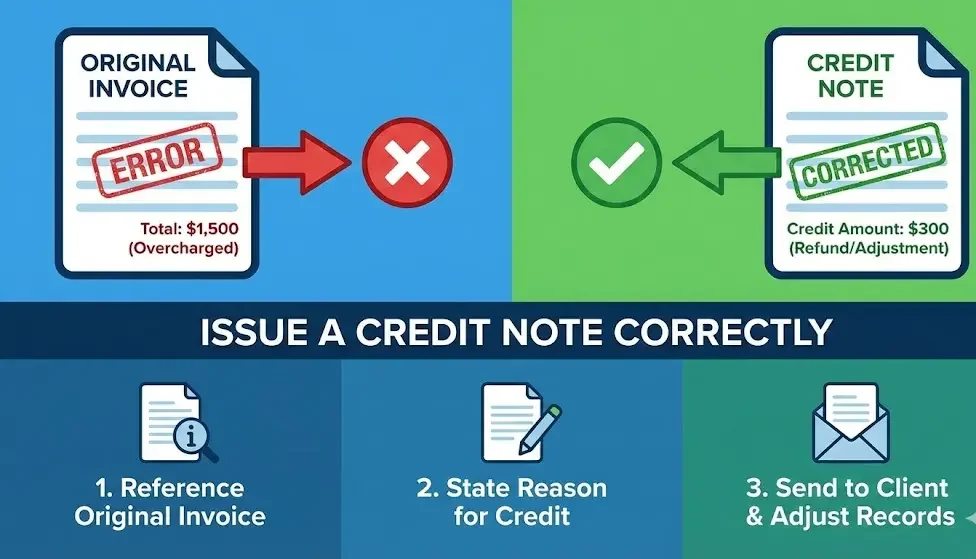
Mistakes in invoicing are a normal part of running a business. Even with strong internal systems, errors can still happen—an outdated price may be used, the wrong quantity might be entered, a discount may be missed, or tax could be calculated incorrectly. While these mistakes are common, the way a business responds to them has a direct impact on customer trust, cash flow, and financial accuracy. One of the most professional ways to correct an invoice error is by issuing a credit note.
A credit note is an official document used to reduce or reverse part of an invoice that has already been sent. It provides a clear audit trail, keeps records accurate, and helps both the business and the client understand the correction. When issued properly, it turns a potentially frustrating billing mistake into a smooth and transparent resolution.
Knowing Exactly When a Credit Note Should Be Issued
Not every billing issue requires canceling and recreating an invoice from scratch. A credit note is most useful when the original invoice has already been issued and only part or all of the amount needs to be reduced.
Common situations include overcharging a customer, billing for products that were later returned, charging for services that were canceled, applying the wrong tax rate, or accidentally listing duplicate items. In each of these cases, the original invoice remains part of the financial history, so instead of deleting it, the credit note adjusts the value in a compliant and traceable way.
Recognizing early that a credit note is required helps prevent confusion. The longer an incorrect invoice remains uncorrected, the more likely it is to affect payment expectations, client trust, and accounting reports.
Why Speed Matters When Correcting Invoice Errors
Once the error is discovered, timing becomes critical. Delaying the correction can lead to unnecessary payment disputes, client frustration, and inaccurate revenue reporting.
Promptly issuing a credit note shows the client that your business takes responsibility seriously. It communicates professionalism and demonstrates that your systems are built around transparency. Clients appreciate quick resolutions, especially when the mistake affects how much they owe.
Fast action also protects internal records. If the incorrect invoice remains open for too long, it may be included in monthly reporting, tax calculations, or revenue summaries. Correcting it quickly ensures the financial statements reflect the true earnings of the business.
Always Connect the Credit Note to the Original Invoice
A credit note should never exist in isolation. One of the most important steps is linking it directly to the original invoice number.
This reference creates clarity for both the business and the customer. It removes doubt about which transaction is being corrected and prevents the credit from being applied to the wrong account or payment.
For businesses handling multiple invoices for the same client, this step is even more important. A missing invoice reference can create confusion during reconciliation and make future audits more difficult.
A well-linked credit note creates a clean paper trail that explains the full story of the transaction—from the original charge to the correction.
Include Complete and Accurate Information
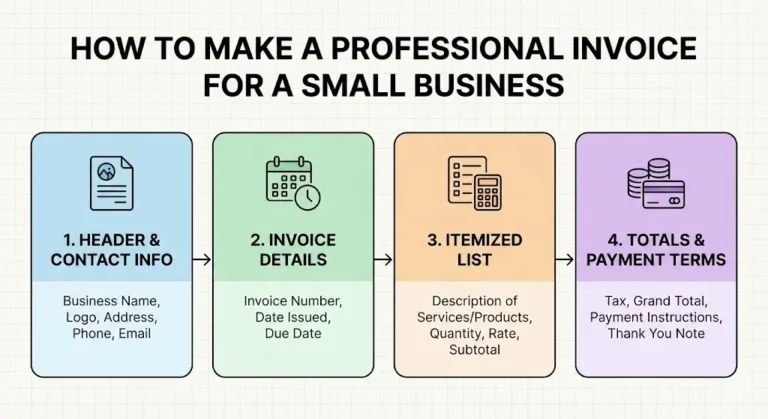
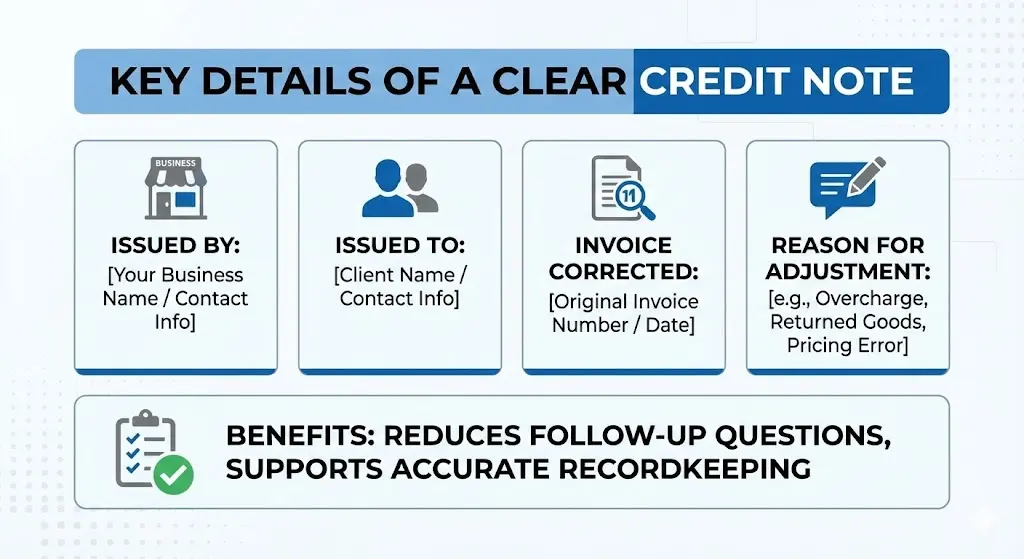
A professional credit note should include all the details needed to make the correction clear and easy to understand.
This includes:
- The business name and contact details
- The client’s name and billing information
- The credit note number
- The original invoice number
- The date of issue
- The corrected amount
- A short reason for the adjustment
The purpose of including complete details is not just compliance—it also reduces unnecessary follow-up questions. When clients can instantly understand what changed and why, the process feels smooth and trustworthy.
Make the Corrected Amount Easy to Understand
One of the biggest causes of confusion is unclear financial presentation. The amount being credited should be displayed in a way that makes the adjustment obvious.
If the entire invoice is being reversed, the full amount should be shown clearly. If only part of the invoice is being corrected, the partial reduction should be easy to identify.
The client should be able to answer these questions immediately after reading the document:
- How much was reduced?
- What balance remains?
- Is a refund due?
- Will this amount be applied later?
When the numbers are simple and transparent, misunderstandings are far less likely.
Clearly Explain the Reason for the Credit
A short explanation builds trust. Clients do not need a long story, but they do need a specific reason.
For example, instead of writing adjustment made, use something more direct like duplicate service charge removed or pricing corrected to agreed rate. A precise explanation reassures the client that the issue has been properly reviewed.
This transparency is especially important in long-term business relationships. Honest and factual communication turns mistakes into opportunities to strengthen trust.
Clarify What Happens Next With Payment
The financial outcome of a credit note depends on whether the invoice has already been paid.
If the client has not paid yet, the credit note simply reduces the outstanding balance. The client then pays the new corrected total.
If the invoice has already been paid, the business should clearly explain the next step. This may involve:
- Issuing a refund
- Applying the credit to the next invoice
- Keeping the amount as account credit for future services
This part of the process should always be communicated clearly in the email or message accompanying the credit note. It avoids confusion, protects the client experience, and reduces back-and-forth communication.
Properly Recording the Credit Note in Your Financial Records
A credit note is not just a customer-facing document—it also has accounting implications.
Because it reduces the original invoice value, it also reduces recognized revenue. If it is not recorded correctly, your books may overstate income, tax liabilities, or receivables.
Proper recording ensures:
- Revenue reports remain accurate
- Client balances stay updated
- Tax reporting reflects the real amount earned
- Audit trails remain complete
This is especially important for month-end and year-end reporting, where even small invoicing errors can distort financial performance.
Common Mistakes to Avoid
Many businesses unintentionally create bigger issues while trying to fix a small billing mistake.
Some of the most common credit note mistakes include:
- Sending a replacement invoice without reversing the original
- Forgetting to mention the original invoice number
- Writing vague reasons for the correction
- Failing to update bookkeeping records
- Not informing the client how the adjustment affects payment
Avoiding these errors keeps the correction professional and prevents the same issue from reappearing during reconciliation.
Reduce the Chances of Future Invoice Errors
While credit notes are useful, prevention is always better than correction.
Businesses can reduce invoicing mistakes by introducing stronger review systems before sending invoices. This might include double-checking quantities, using fixed pricing templates, confirming tax rules, and maintaining updated customer billing profiles.
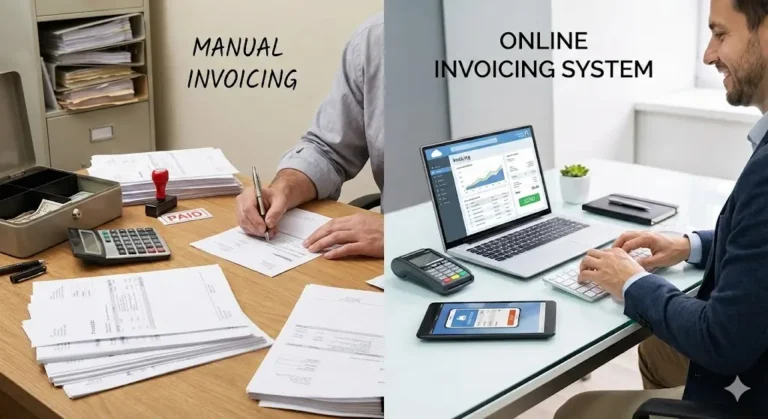
Automation tools can also help by reducing manual entry mistakes and flagging unusual totals before an invoice is finalized.
Even simple habits—such as reviewing large invoices twice before sending—can dramatically lower error rates.
Protecting Client Relationships Through Transparency
Customers understand that mistakes happen. What they remember most is how quickly and honestly the issue was resolved.
A correctly issued credit note sends a strong message: your business values fairness, accountability, and clear communication. Rather than damaging the relationship, a well-handled correction often improves confidence because it shows the client they can trust your team to act responsibly.
In many cases, transparency during small billing mistakes strengthens long-term loyalty.
Conclusion
Sending an invoice with the wrong amount can be stressful, but it does not need to become a larger business problem. A properly issued credit note allows you to correct the mistake professionally, keep financial records accurate, and maintain strong client relationships.
The key is to act quickly, reference the original invoice, explain the reason clearly, and communicate what happens next. When handled with transparency and precision, a credit note becomes more than just a correction tool—it becomes a reflection of your business’s professionalism and reliability.